Critical staff shortages are forcing Malawi’s healthcare workers to serve seven times more than recommended average population levels, a new report shows.
With one healthcare worker in Malawi serving 1495 people instead of the global recommendation of 204, experts have warned that the situation compromises service delivery and is contributing to high morbidity rates.
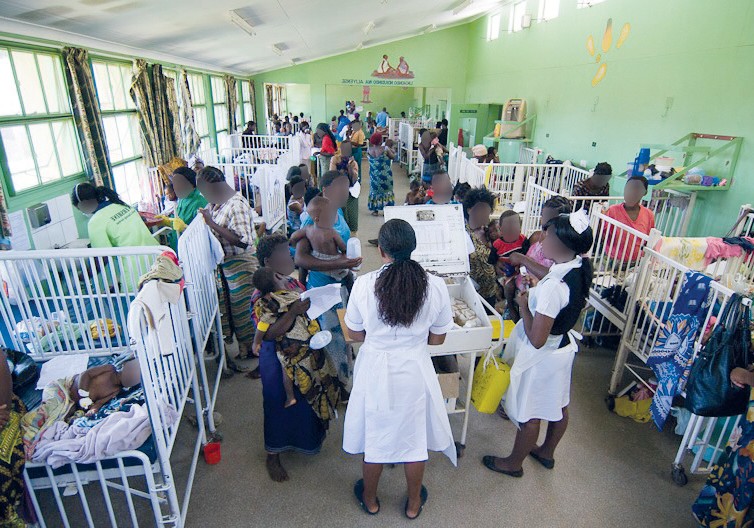
Based on the 2026 State of the Health Workforce in Africa Report by the World Health Organisation (WHO), Malawi has 6.69 workers per 10 000 populations against Africa’s average of 15.68 and the world’s average of 49.
Workers feel the pinch, implications
In his reaction to the report yesterday, Human Resources for Health (HRH) Coalition chairperson Solomon Chomba said the chronic shortage is leading to high incidence of burnout among healthcare workers.
He said: “The burnout is coming due to overworking and working beyond the prescribed scope, working outside what they were trained in. Cases of burnout, depression, anxiety have become very prominent among our healthcare workers because they don’t rest.
“Instead of offering the best treatment, we are offering a treatment that is completely undesirable and undesired. Instead of getting healed, patient’s conditions worsen and even others lose their lives.”
The WHO report shows that Malawi has 0.07 dentists against the recommended 12; then 0.8 medical doctors against the recommended 12. It has 5.4 nurses against 56.73 benchmarks and a midwifery personnel ratio of 0.3 against 9.23 standards.
It also has 0.08 pharmacists against 0.81; community health workers (CHWs) stand at 7.4 against 11.63; laboratory scientists stand at 0.3 against 4.4 while there are 2.95 medical assistants against the 2.33 requirement.
Society of Medical Doctors president Victor Mithi said the few health workers are overburdened, and eventually fail to offer high quality services.
He said: “They will be prone to medical errors resulting in death of patients; develop an attitude not favourable for the healing environment of the patients in terms of how they talk and offer services because they are under pressure.
“Quality keeps going down and then hospitals, instead of being the healing places, are converted into a death trap, which by the end of the day becomes a very dangerous trajectory for the country.”
On his part, Anaesthesia Association of Malawi president Ralph Mphula said the shortage threatens Malawi’s broader development agenda because a weak health system affects productivity, education outcomes and economic growth.
“Issues of corruption cannot be ignored as patients end up bribing health workers so that they get treated in time. In rural areas, the impact is even more severe, where one clinician may be responsible for an entire catchment population with very limited support,” he lamented.
Where is the problem?
Statistics from the HRH coalition shows that there are about 50 medical doctors and 3 000 nurses, over 600 diploma clinicians and more than 1 000 medical assistants with WHO estimating unemployment at 30 percent.
The data also show that out of 14 361 established positions, only 6 676 positions are filled, creating a 54 percent vacancy rate.
The Malawi Health Sector Strategic Plan (HSSP 3) shows a vacancy rate of 37 percent for medical officers, 63 percent for clinical officers, 40 percent for nurse/midwifery officers and 54 percent for nurse/midwife technicians.
Mithi noted the wage bill cap by development partners on recruitment, but said Malawi needs to find local resources for hiring, suggesting introduction of taxes on hazardous products and strengthening paying wings within facilities.
Seasoned nurse-midwife and community health specialist Dorothy Ngoma said the shortage is not just a result of low absorption of trained workers, but also because some workers trek to other countries for greener pastures.
“Just look even at our leaders when they are sick, they go offshore because they can afford to pay there. They are boosting the healthcare systems of other countries while our own is ailing,” she said.
Chomba suggested promotion of some of the long-serving and upgraded workforce to create vacancies and urged the government to negotiate with donors on the wage bill cap.
“We also need health insurance. If more citizens contribute towards their health, we may have adequate resources to sustain health facilities,” he said.
However, Kamuzu University of Health Sciences (Kuhes) professor of public health Adamson Muula said more training institutions have emerged and numbers are growing.
He said: “Previously, dentists had to be trained abroad, but we have started producing them at Kuhes, with about 20 graduating each year. We started with 12 medical doctors, but we are now graduating 120 each year;
“Kuhes is also graduating 400 nurses each year, but you have others from Malawi College of Health Sciences, Malamulo College, Malawi Adventist University, Mzuzu University and laboratory technologists.”
The WHO has also advised Malawi to progressively increase domestic investment in the health workforce, targeting approximately a 15 percent annual increase in the wage bill through 2030.
Ministry of Health and Sanitation spokesperson Benedicto Mbewe said he needed time to respond, but in the MHSSP III, government states that it will enhance recruitment, selection, deployment and equitable distribution of human resources for health.
Figures also show that last year, government recruited 5 992 health workers and promoted 898.
Of these, 4 250 were recruited with support from Global Fund while 1 742 were hired with local resources.